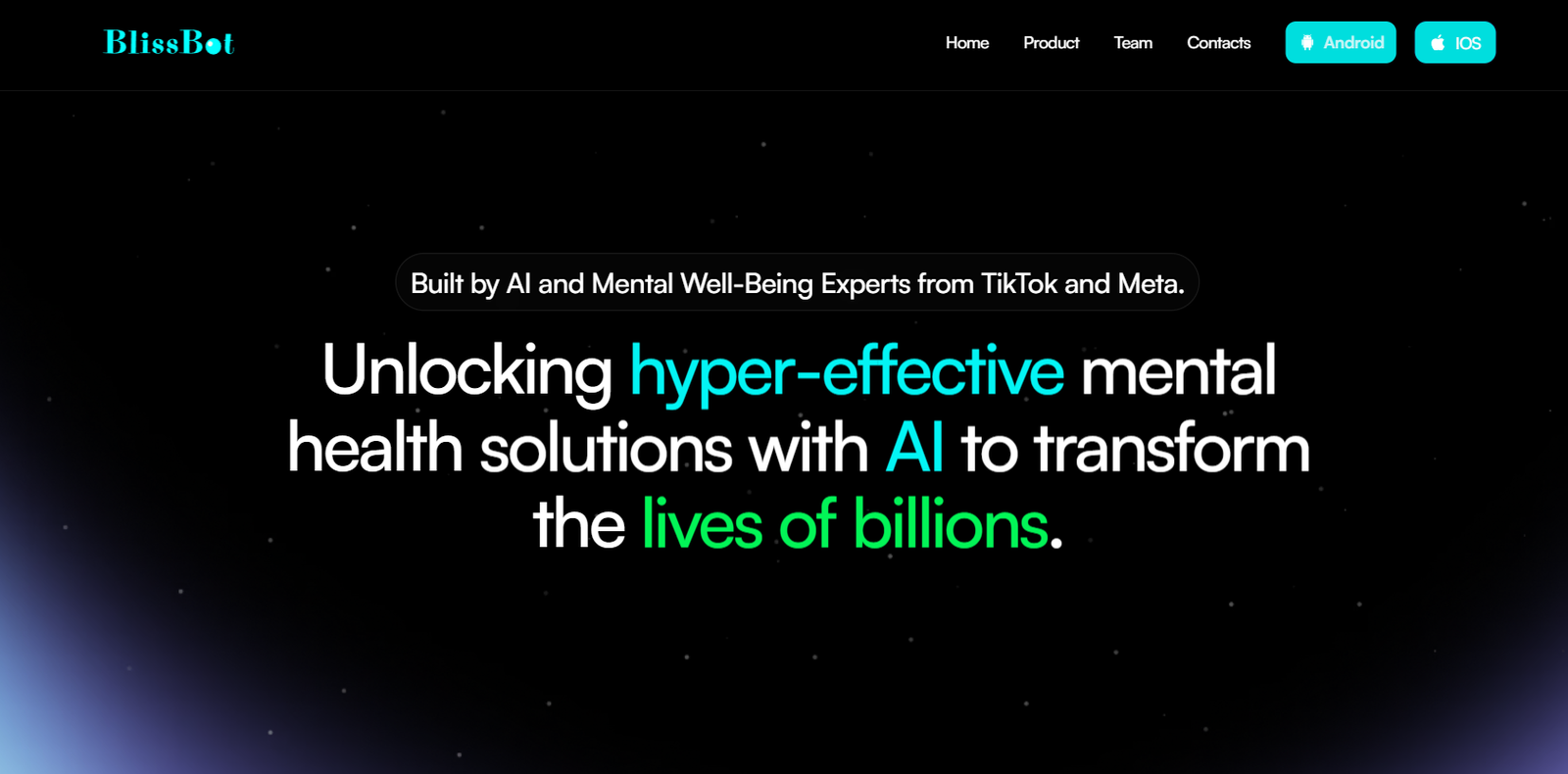
BlissBot AI is a compassionate AI-powered chatbot built to support emotional well-being, mindfulness, and mental clarity. Described as a personal AI wellness companion, it is designed to be available around the clock for supportive, judgment-free conversations. Whether someone is navigating anxiety, stress, or simply looking to connect with their emotions more mindfully, BlissBot offers thoughtful and nurturing dialogue.
Unlike typical mental health chatbots focused on productivity or clinical solutions, BlissBot is centered around emotional healing, self-reflection, and journaling. The tool blends AI with principles from mindfulness and behavioral psychology to offer a meaningful user experience rooted in calm and empathy.
Features
BlissBot AI includes several core features aimed at promoting mindfulness and emotional support. It provides emotionally intelligent, warm conversations to help users talk through their thoughts. Mood tracking is included to help users recognize patterns in their emotions over time.
It also offers guided journaling prompts, which can be especially helpful for people new to mindfulness or reflection practices. The chatbot can walk users through breathing exercises and meditation routines to support mental grounding. Daily check-ins allow for consistent emotional tracking, while the privacy-first approach means users don’t need to create an account or worry about data being stored.
The chatbot is web-based, but there are future plans to support mobile platforms and WhatsApp integration.
How It Works
BlissBot operates on a generative AI model tuned for emotional support. Users can begin chatting directly on the BlissBot website, without registration or login. Once the session starts, the AI provides responses that are empathetic, non-judgmental, and tailored to the user’s emotional state.
Depending on the flow of conversation, BlissBot may offer guided journaling prompts, mindfulness exercises, or supportive reflections. The AI does not store user data between sessions, so each interaction is independent, preserving privacy. This also means it doesn’t build long-term memory or track specific user history.
Use Cases
BlissBot AI is suited for anyone seeking emotional support, clarity, or a mindfulness practice. It’s especially helpful during periods of stress or anxiety, offering a calming outlet for expression. Users can check in with their emotions daily or maintain a digital journal through guided reflections.
It can also support people experiencing loneliness by providing a non-judgmental conversational partner. For those already in therapy, BlissBot may serve as a complementary tool, helping with emotional preparation or post-session reflection.
Pricing
As of now, BlissBot is free to use. Users can access the chatbot, journaling features, and mindfulness support without cost or creating an account. All sessions are private, and no conversation history is saved.
A premium version is currently in development. Planned features may include personalized emotional insights, journal summaries generated by AI, deeper meditation guidance, mobile app integration, and secure user accounts for session continuity.
For the most accurate and up-to-date details on pricing, users should refer directly to the official BlissBot website.
Strengths
BlissBot stands out for its emotional intelligence and mindfulness-first design. It’s free, easy to access, and doesn’t require an account, which makes it ideal for quick emotional check-ins. The AI feels warm and understanding, offering a calming space without pressure.
Its privacy commitment is a strong feature, especially in the mental health space. Since no data is stored, users can engage openly with the chatbot. Its journaling and mindfulness capabilities are a welcome addition to traditional mental health support systems.
Drawbacks
Because it doesn’t store data, BlissBot lacks personalized continuity across sessions. Users looking for an AI that remembers past conversations may find this limiting.
It’s also not a substitute for licensed mental health professionals, and users with clinical needs should consult a therapist. At the moment, the chatbot is limited to text-based interaction, and mobile support is not yet live. Some advanced features are still in development and only available in future premium plans.
Comparison with Other Tools
While BlissBot shares its space with other AI mental health tools like Wysa and Woebot, its key distinction lies in its mindfulness-centered approach. Unlike tools that focus heavily on cognitive behavioral therapy or clinical dialogue, BlissBot emphasizes journaling, reflection, and emotional calm.
It is currently free, requires no login, and doesn’t store personal data, making it an accessible and low-barrier option for users seeking day-to-day emotional support. However, it lacks mobile app availability and some of the advanced analytics and personalization offered by competitors.
Customer Reviews and Testimonials
BlissBot is a relatively new tool, and as of now, there are limited customer reviews available on third-party platforms like Product Hunt or Trustpilot. However, early feedback shared on its website and in user communities highlights its gentle and supportive tone.
Users have expressed appreciation for how natural and empathetic the chatbot feels. Many note that it provides relief during emotionally challenging moments and that it offers a unique type of comfort not found in traditional apps.
Conclusion
BlissBot AI fills a meaningful gap in the mental health space by offering a mindfulness-focused chatbot that prioritizes emotional support and self-reflection. It is simple to use, completely free, and accessible without requiring sign-ups or downloads.
Its strength lies in its empathetic communication style and focus on user privacy. While it’s not a replacement for professional therapy, it serves as a valuable companion for daily emotional check-ins and self-care routines.
As premium features roll out, BlissBot has the potential to become a powerful mental wellness companion for anyone seeking more mindful, emotionally supportive technology.