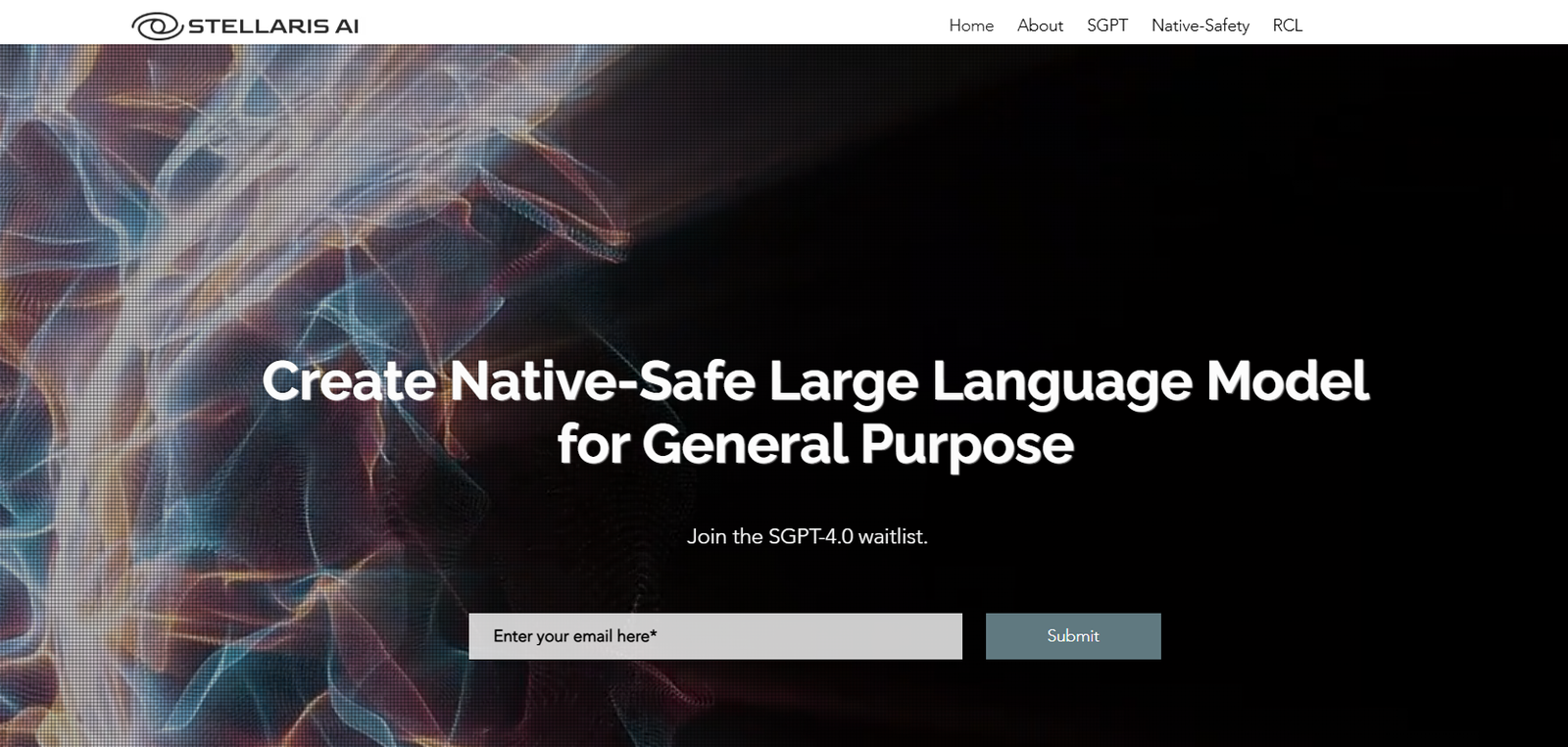
Stellaris AI is an enterprise-grade generative AI platform that helps organizations extract, manage, and automate knowledge across internal data systems. Designed for large companies with complex data ecosystems, Stellaris AI focuses on intelligent knowledge retrieval, workflow automation, and domain-specific generative assistance.
By turning fragmented and unstructured internal data into usable insights, Stellaris AI enables employees to ask natural language questions and receive highly relevant, context-aware answers. The platform uses retrieval-augmented generation (RAG), semantic search, and LLM orchestration to support enterprise workflows across engineering, sales, HR, operations, and more.
Stellaris AI is particularly useful in environments where knowledge is spread across disconnected systems like wikis, ticketing platforms, CRMs, and document repositories. It offers high security, full compliance, and easy integration with tools already in use.
Features
Stellaris AI includes a wide array of capabilities tailored for enterprise knowledge management and automation:
Retrieval-Augmented Generation (RAG):
Combines LLM reasoning with real-time retrieval from internal knowledge bases to produce accurate, contextual responses.
Enterprise Knowledge Ingestion:
Connects to internal sources like Confluence, SharePoint, Jira, Notion, GitHub, Google Drive, Slack, Zendesk, and more.
Natural Language Querying:
Allows users to ask plain English questions and receive detailed answers grounded in proprietary company knowledge.
Multimodal Document Parsing:
Supports PDFs, PowerPoints, spreadsheets, codebases, and chat transcripts with advanced file understanding.
Custom Workflows and Agents:
Build task-specific AI agents to automate common activities like onboarding, ticket triage, sales enablement, and reporting.
Security and Compliance:
Includes SOC 2 compliance, data encryption, access control, and deployment options for cloud or on-premise environments.
Domain-Specific Tuning:
Fine-tunes model behavior to align with industry-specific vocabulary, internal policies, and brand voice.
Dashboard and Analytics:
Tracks usage, engagement, and performance metrics for insights into adoption and ROI.
How It Works
Stellaris AI connects to a company’s internal data sources through APIs or secure connectors. Once access is granted, it ingests and indexes all the available data using semantic embeddings and metadata extraction.
When a user enters a question or task, the system applies retrieval-augmented generation:
It semantically searches internal documents for relevant snippets.
It combines these snippets with the user query and sends them to a large language model.
The LLM generates a grounded, context-specific response based on the retrieved material.
The response can be displayed as a chat-style answer, a summary, a list of suggested actions, or even an automated workflow. Users can further refine results, trigger tasks, or escalate issues, depending on the workflow integration.
Admins can create customized agents or workflows that specialize in tasks like helping developers troubleshoot tickets, helping HR teams answer employee questions, or helping sales teams access key account data instantly.
Use Cases
Stellaris AI is designed to serve knowledge-heavy teams across a wide range of departments and industries.
Engineering Teams:
Troubleshoot code, infrastructure, or deployment issues by querying internal documentation and past tickets.
Automatically generate summaries from Jira tickets, GitHub issues, or logs.
Customer Support and Success:
Reduce ticket resolution times by arming agents with AI that understands support docs, CRM notes, and product FAQs.
Provide agents with real-time response suggestions.
Sales and Marketing:
Enable sales reps to quickly surface relevant account history, product specs, pricing, and case studies.
Automate RFP responses and proposal drafts.
HR and Internal Ops:
Answer employee questions on benefits, policies, or procedures with an AI trained on internal HR documentation.
Automate onboarding materials and internal comms.
Product and Project Management:
Summarize product requirement documents, meeting notes, and roadmap files.
Automate status report generation and cross-functional updates.
Executive and Strategy Teams:
Instantly access business intelligence scattered across reports, dashboards, and memos.
Ask strategic questions and get synthesized responses from internal data.
Pricing
Stellaris AI does not list specific pricing information publicly. As an enterprise platform, pricing is customized based on:
Organization size and number of users
Number of data source integrations
Use case complexity (e.g., agents, RAG pipelines)
Deployment model (cloud-hosted or on-premise)
Customization level and support requirements
To get a tailored quote or request a product demo, businesses must contact the Stellaris AI sales team via https://www.stellaris-ai.com/contact.
Strengths
Stellaris AI offers several advantages for large-scale enterprises focused on AI knowledge automation:
Enterprise-Ready Architecture:
Secure, scalable, and compliant with IT governance requirements.
Domain-Aware LLMs:
Fine-tuned language models provide highly relevant, grounded answers using internal data.
Multi-Source Retrieval:
Integrates with a wide range of SaaS tools and data platforms to centralize fragmented knowledge.
Customizable Workflows:
Users can build their own agents or automation flows based on their team’s needs.
High-Accuracy RAG:
Combines retrieval with generation to avoid hallucination and ensure trustworthy answers.
Minimal User Training Needed:
Natural language interface allows quick adoption without technical barriers.
Low IT Overhead:
No need to migrate data; works as an overlay across existing systems.
Drawbacks
Despite its enterprise appeal, there are some considerations:
No Public Free Tier:
The platform does not offer a freemium or self-service version for individuals or small teams.
Enterprise Deployment Required:
Best suited for organizations with dedicated IT or ops teams for integration and scaling.
API-First Configuration Complexity:
Advanced setup may require some technical resources for integrating multiple data sources.
Limited Public Resources:
As an enterprise B2B product, most technical documentation and case studies are available only on request.
Comparison with Other Tools
Stellaris AI competes in the enterprise AI and knowledge automation space alongside platforms like:
Glean: Focuses on enterprise search but lacks deep workflow customization.
Hebbia: Emphasizes document analysis but is more finance-focused.
Guru: Provides knowledge cards but doesn’t use LLMs as deeply.
Microsoft Copilot: Works well with Microsoft data but lacks deep cross-SaaS integrations.
What differentiates Stellaris AI is its combination of RAG, LLM orchestration, workflow automation, and data source integration within a security-first architecture. It’s built for holistic enterprise knowledge use, not just internal search.
Customer Reviews and Testimonials
Stellaris AI does not publish public testimonials on its website, but it highlights successful implementations in sectors such as:
Technology
Financial services
Healthcare
Consulting
Government and defense
Early adopters report improvements in knowledge accessibility, reduced time spent searching internal systems, and increased productivity across support and engineering teams. Interested organizations can request customer references or case studies directly from the sales team.
Conclusion
Stellaris AI is a powerful platform built to solve one of the most pressing problems in enterprise environments—turning scattered internal knowledge into usable, actionable intelligence. Through advanced AI models, secure architecture, and customizable workflows, it enables teams to ask better questions, find faster answers, and automate repetitive tasks.
For organizations looking to supercharge productivity, reduce manual search, and integrate AI into daily operations without disrupting existing systems, Stellaris AI is a strong solution worth exploring.