
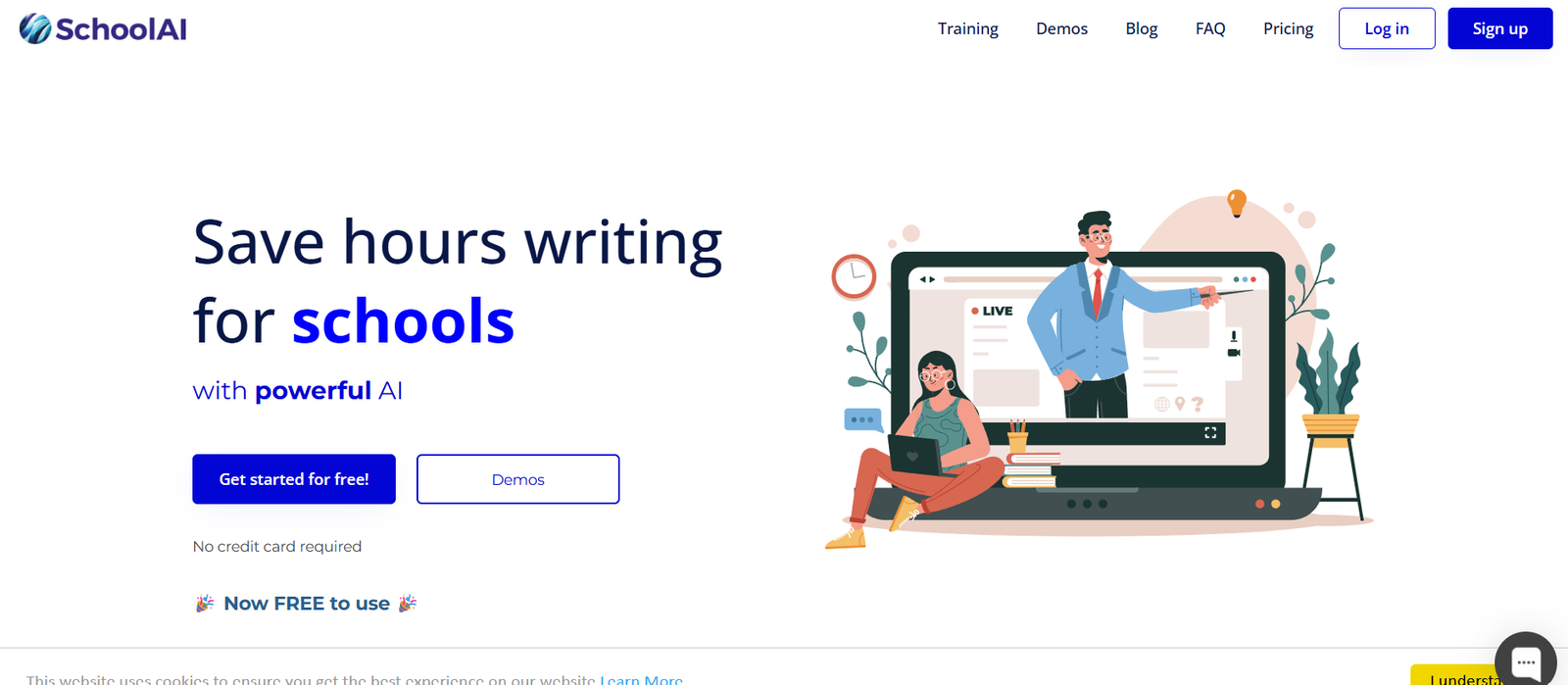
SchoolAI is an education-focused platform that equips teachers and school administrators with AI-powered tools to enhance instruction, personalize learning, and save time on classroom tasks. Unlike general-purpose AI tools, SchoolAI is designed specifically for K-12 education, with a deep understanding of classroom workflows, student engagement, and curriculum alignment.
Built with a strong focus on student safety and educator control, SchoolAI integrates artificial intelligence into the classroom in a practical, ethical, and secure way. From real-time student feedback to AI co-teachers and behavior monitoring, it’s built to support the modern educator without replacing them—placing teachers firmly in control while scaling their impact.
Features
AI Chatbot for Classrooms: Offers a secure, controlled AI chatbot (called the “AI Teaching Assistant”) that students can interact with for academic support.
Co-Teacher Mode: Allows teachers to set boundaries and moderate how AI interacts with students during lessons or activities.
Student Voice Journal: A reflective journaling tool that helps students express emotions and track well-being, with alerts for teachers when support may be needed.
Lesson Support: Teachers can generate exit tickets, quizzes, summaries, and lesson ideas with AI assistance.
Teacher Dashboard: Provides insights into student interactions, reflections, and academic progress in one easy-to-navigate interface.
Privacy and Safety Controls: Built with FERPA and COPPA compliance, ensuring data privacy and responsible AI usage in schools.
Plug-and-Play Setup: Works with existing devices and systems, with no need for complex tech integrations.
Multi-Device Support: Accessible on laptops, tablets, and classroom smartboards.
How It Works
SchoolAI is implemented at the school or district level and offers both individual teacher access and system-wide deployment. After onboarding, educators can log in to the SchoolAI dashboard, where they access a suite of tools customized for classroom needs.
Teachers can launch AI-powered sessions in real time—such as using the AI Co-Teacher to assist with in-class questions or generating formative assessments at the click of a button. Students interact with the platform through school-managed devices, always within parameters set by the teacher or admin.
SchoolAI logs every student interaction and offers visibility into who asked what and how the AI responded. Teachers can then use these insights to identify learning gaps, support social-emotional development, and adjust instruction accordingly.
Use Cases
Real-Time Tutoring: Use the AI assistant to offer students personalized help during lessons or assignments.
Lesson Planning: Save time with AI-generated exit tickets, assessments, and writing prompts.
Social-Emotional Learning (SEL): Monitor student emotional well-being through the voice journal feature and intervene when needed.
Differentiated Instruction: Tailor questions and activities for different learning levels with AI support.
Classroom Management: Keep students engaged with constructive, AI-led academic conversations.
Administrator Insights: Monitor AI usage across the school, ensuring safe and effective implementation.
Pricing
SchoolAI offers pricing plans tailored for schools and districts. While specific prices are not publicly listed on the SchoolAI website, interested educators and school leaders can request a custom quote based on the number of users, type of deployment, and support services needed.
A free trial or pilot program is often available to help schools evaluate the platform before making a full commitment. SchoolAI is typically billed annually and offers implementation assistance and professional development as part of enterprise rollouts.
Strengths
Purpose-Built for K-12 Education: Designed specifically for the needs of teachers, students, and school administrators.
Teacher-Controlled AI: Educators set the rules and guide how AI is used in class, ensuring alignment with pedagogy.
Enhances, Doesn’t Replace: Focuses on supporting teachers—not automating or removing them from the learning process.
Compliant and Secure: Built with student privacy in mind, adhering to U.S. education regulations like FERPA and COPPA.
Time-Saving Tools: Helps reduce teacher workload with instant lesson ideas, summaries, and assessments.
Student Well-Being Focus: Promotes social-emotional learning with reflection tools and alerts.
Drawbacks
No Transparent Pricing: Requires direct contact for quotes, which may slow the decision-making process.
Dependent on School Buy-In: Not immediately accessible for individual educators without administrative approval.
Learning Curve for New Users: Some training may be needed to fully integrate the platform into classroom routines.
Limited Beyond K-12: Focus is specifically on primary and secondary education—not suited for higher ed or adult learning environments.
Comparison with Other Tools
SchoolAI is distinct from general AI tools like ChatGPT, Grammarly, or Khanmigo, which may offer educational support but lack classroom-specific oversight. Unlike open AI tools that can be misused or present safety concerns in school settings, SchoolAI provides teacher-led access with full transparency into every AI-student interaction.
Compared to traditional edtech tools like Nearpod, Edpuzzle, or Google Classroom, SchoolAI focuses specifically on the integration of artificial intelligence to assist in real-time feedback, SEL, and academic differentiation.
Its most direct competitors are emerging AI education platforms like MagicSchool.ai or Diffit, but SchoolAI differentiates itself through deeper classroom integration, administrative oversight features, and emotional well-being support.
Customer Reviews and Testimonials
Educators using SchoolAI report significant time savings, improved student engagement, and enhanced support for struggling learners. Testimonials on the official website and in education forums highlight how the platform improves classroom efficiency and deepens student-teacher connections.
Common feedback includes:
“I can spend more time teaching and less time creating materials.”
“My students love the AI assistant—it’s like having another tutor in the room.”
“The voice journal helped me catch emotional struggles early on and step in before things got worse.”
SchoolAI is currently being used in over 1,000 schools across the U.S., reflecting growing trust in its approach to ethical AI in education.
Conclusion
SchoolAI brings responsible artificial intelligence into the K-12 classroom with tools designed to support—not replace—teachers. With features that enhance lesson planning, student feedback, social-emotional learning, and academic engagement, it’s an ideal solution for schools looking to implement AI in a safe, structured, and impactful way.
Its emphasis on educator control, student privacy, and real-time value makes SchoolAI one of the most thoughtful and classroom-ready AI platforms available. For school leaders and teachers ready to embrace the future of education technology, SchoolAI provides a well-rounded, mission-aligned toolset to make teaching smarter and more supportive.


