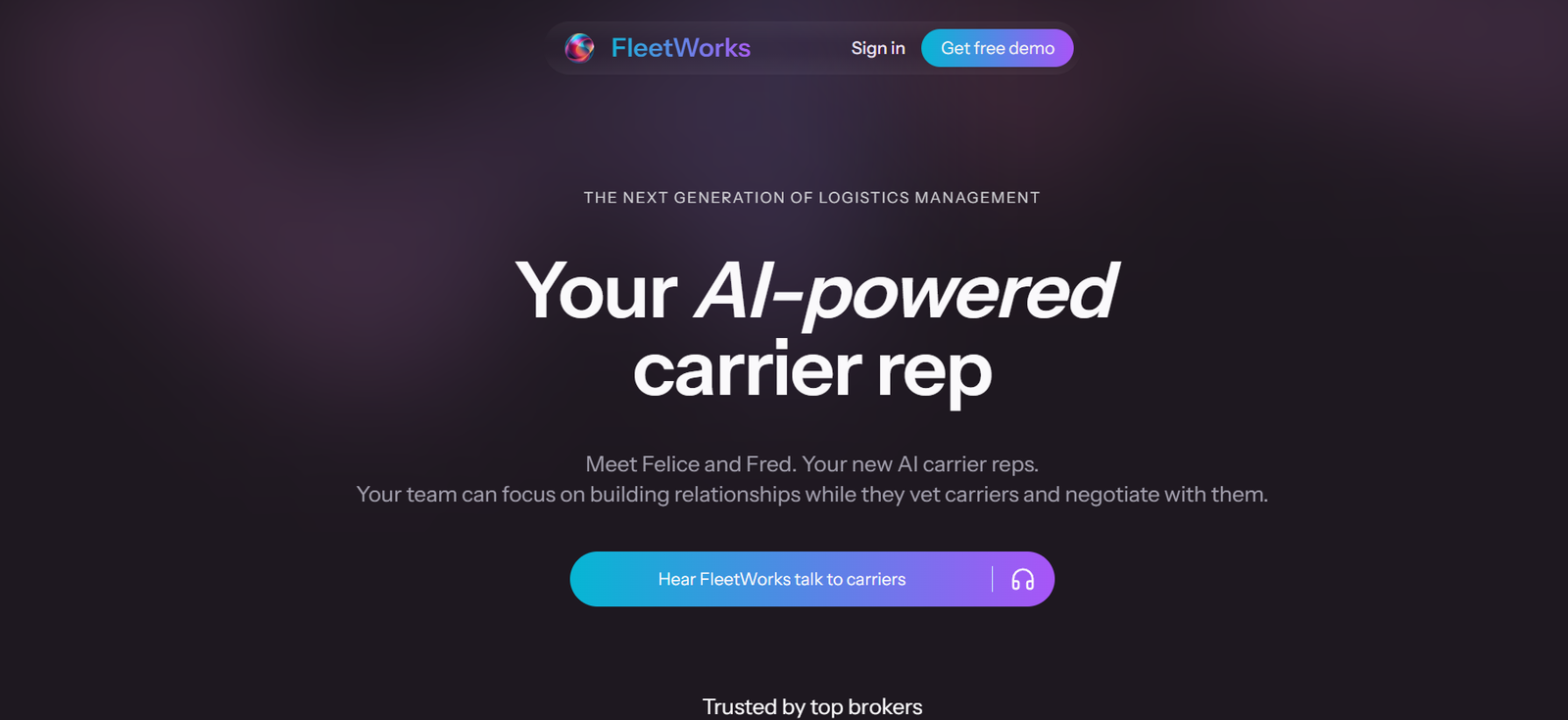
Fleetworks AI is a cutting-edge enterprise platform that enables businesses to automate internal workflows using autonomous AI agents. These agents are designed to work across multiple tools, including Slack, Salesforce, Notion, and more, helping teams eliminate repetitive tasks, reduce human error, and move faster without sacrificing quality or control.
Unlike traditional automation tools that rely on rigid, rule-based workflows, Fleetworks AI uses intelligent agents that can make decisions, adapt to context, and collaborate with human teams in real time. It’s a purpose-built solution for operations, support, and product teams looking to deploy scalable AI in secure enterprise environments.
Features
Fleetworks AI includes a robust suite of features tailored to modern enterprise operations.
Autonomous agents: Fleetworks agents can read, write, and act across SaaS tools to complete tasks such as triaging support tickets, managing CRM entries, or scheduling tasks.
Multitool integrations: Built to connect with platforms like Slack, Notion, Salesforce, Zendesk, and others, enabling seamless cross-platform actions.
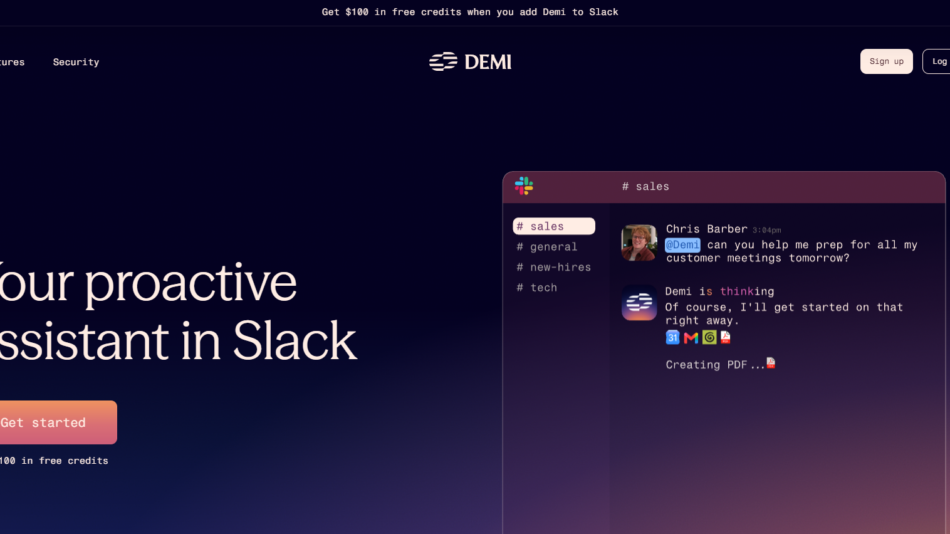
Natural language interface: Agents can be instructed via simple prompts in Slack or other interfaces, reducing the need for manual interfaces or scripts.
Process-level memory: Agents maintain state and memory over time, enabling them to operate within long-term workflows and multi-step tasks.
Secure by design: Offers SOC 2 compliance, enterprise-level authentication, and fine-grained permission controls for data protection.
Workflow customization: Teams can define and adjust task logic, approval workflows, and exception handling for full control over automation.
Low-code configurability: Allows teams to launch agents quickly without deep technical overhead.
Human-in-the-loop collaboration: Fleetworks agents can loop in humans when judgment is needed, ensuring critical decisions remain under team control.
How It Works
Fleetworks AI operates by deploying intelligent software agents that can interact with your company’s internal tools and workflows. Once integrated, these agents work within tools like Slack or Salesforce to perform tasks such as updating records, responding to tickets, or routing messages.
Teams start by identifying a repetitive or structured workflow, such as onboarding new customers, triaging support tickets, or updating project documentation. A Fleetworks agent is then configured to automate that workflow using natural language commands, API access, and decision-making logic.
The agents are context-aware and capable of learning over time. For example, a support agent may begin by routing tickets and then learn to summarize them, tag them, or escalate only when needed. Human team members can step in at any time to review or modify actions, making the system reliable and safe.
Use Cases
Fleetworks AI is designed for enterprise teams across a variety of functions.
Operations teams automating approval chains, employee onboarding, or vendor communications.
Support teams routing and resolving customer tickets across Zendesk or Intercom with AI triage and follow-up.
Product teams tracking feature requests, summarizing user feedback, or updating internal documentation across Notion and Jira.
Sales teams managing CRM updates, lead follow-ups, and meeting scheduling inside Salesforce and Slack.
HR and People Ops teams automating candidate status updates, policy reminders, or benefits workflows.
Engineering teams coordinating cross-functional releases, incident postmortems, and task assignment through integrated systems.
Pricing
As of June 2025, Fleetworks AI operates on a custom pricing model based on company size, agent usage, and integration complexity. The company does not list fixed pricing plans on its website.
To get started, organizations can request a demo and personalized quote by visiting fleetworks.ai. Pricing likely follows a software-as-a-service (SaaS) subscription structure tailored to enterprise needs, with potential variable costs tied to the number of agents, seats, or transactions.
Strengths
Purpose-built for enterprise use cases with strong security and compliance.
Autonomous agents reduce the need for rule-based scripts and maintenance-heavy workflows.
Works seamlessly across popular business tools.
Enables both automation and collaboration through human-in-the-loop workflows.
Improves speed, accuracy, and reliability of internal processes.
Highly customizable and scalable for growing operations teams.
Drawbacks
Requires organizational buy-in and integration planning for effective deployment.
No public pricing may delay evaluation for smaller teams or startups.
Currently focused on enterprise customers—may not be suitable for freelancers or individuals.
Early-stage product with limited third-party reviews as of mid-2025.
Setup may involve some initial configuration or onboarding assistance from the Fleetworks team.
Comparison with Other Tools
Fleetworks AI differentiates itself from traditional workflow automation tools like Zapier, Make, or UiPath by offering intelligent, autonomous agents rather than simple trigger-action rules. While Zapier automates lightweight tasks, Fleetworks excels in automating complex, multi-step workflows where decision-making is required.
Compared to platforms like Slackbot or Salesforce Flow, Fleetworks provides a more advanced AI layer capable of interpreting context and managing state across tools. Unlike low-code platforms that require detailed setup and monitoring, Fleetworks agents are designed to operate more autonomously, with built-in context awareness and collaborative features.
Its combination of natural language processing, memory retention, and multitool support positions it as a next-generation platform for enterprise workflow automation.
Customer Reviews and Testimonials
As of June 2025, public reviews for Fleetworks AI are limited due to its focus on enterprise customers and private deployments. However, feedback from early pilot teams featured on the company’s website indicates high satisfaction with its operational impact.
One operations lead shared:
“Our agents now handle customer onboarding and support triage in Slack. We reduced manual task volume by 70% without losing visibility.”
Another user commented:
“Fleetworks lets our agents coordinate across Notion, Salesforce, and Zendesk without switching tabs. It’s like having a super-assistant that never sleeps.”
These testimonials suggest that Fleetworks is being embraced by teams looking to scale productivity and reduce administrative burdens without increasing headcount.
Conclusion
Fleetworks AI is redefining enterprise automation with its intelligent, autonomous agents that operate across teams, tools, and workflows. By combining AI decision-making with real-time integrations and secure controls, it offers a smarter alternative to traditional automation platforms.
Ideal for operations, support, and product teams in high-growth environments, Fleetworks helps businesses reduce friction, improve responsiveness, and scale processes reliably. Its human-in-the-loop architecture ensures that automation remains safe, flexible, and aligned with team goals.