
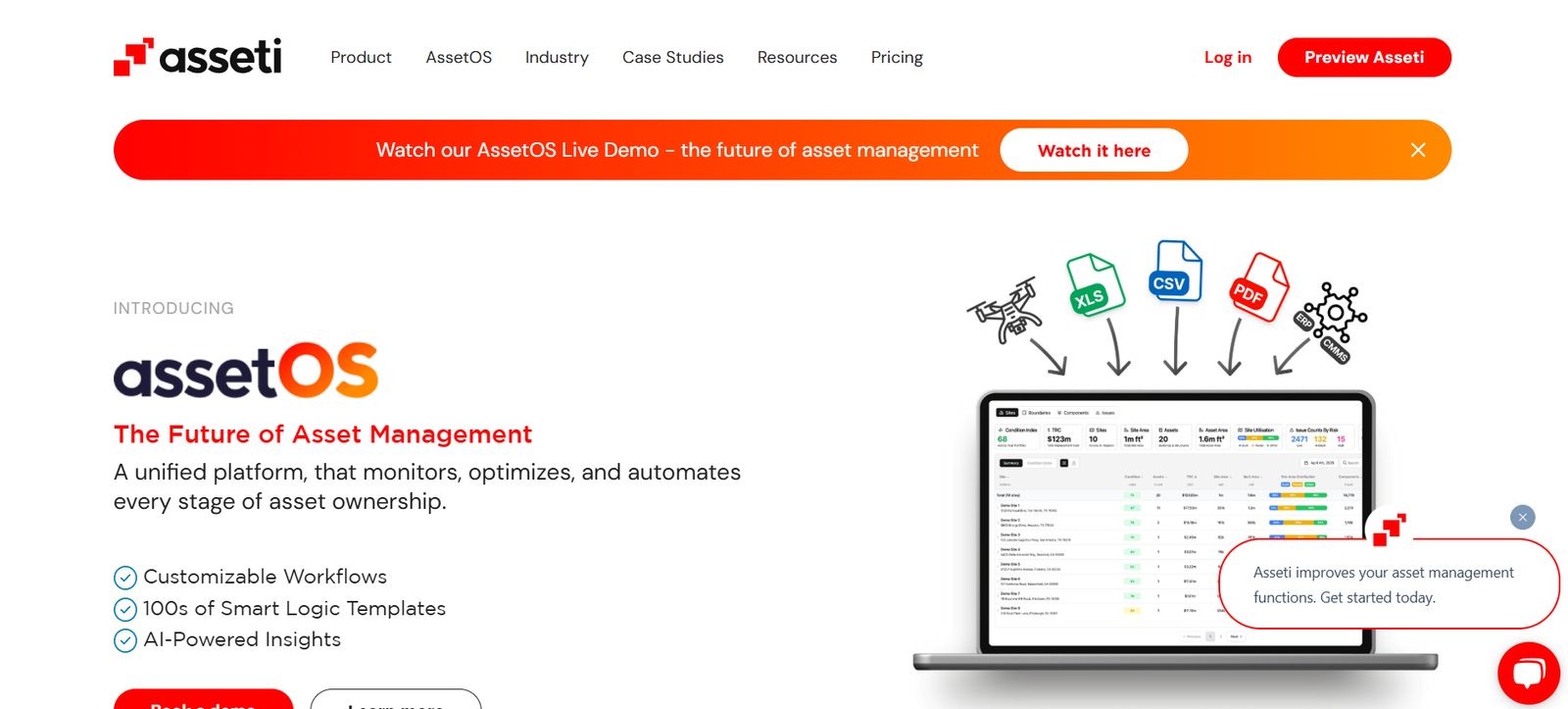
Asseti is a next-generation AI platform built to streamline and enhance infrastructure and asset management. With a focus on real-time data, geospatial intelligence, and computer vision, Asseti provides organizations with the tools to detect, monitor, and manage infrastructure issues across vast physical environments.
Whether it’s roads, utilities, buildings, railways, or energy networks, Asseti transforms traditional asset inspection and maintenance processes into a digitized, automated workflow. This helps teams reduce downtime, allocate resources more effectively, and make informed decisions based on real-time data and predictive analytics.
The platform is particularly suited for enterprises and governments responsible for maintaining complex infrastructure networks, offering a scalable, cloud-based solution that unites visual data, AI processing, and geospatial context.
Features
AI Vision Analysis: Automatically analyzes images and videos captured from drones, satellites, mobile devices, or fixed cameras to detect asset issues.
Geospatial Mapping: Integrates with GIS platforms to display assets and anomalies within a real-world geographical context.
Digital Twin Integration: Create and maintain a digital representation of physical assets to simulate, monitor, and manage performance.
Change Detection: Identify anomalies or degradation over time by comparing historical and real-time data.
Automated Defect Detection: AI identifies defects such as cracks, corrosion, vegetation overgrowth, structural damage, and more.
Custom Dashboards and Reporting: Provides asset managers with real-time operational insights via customizable dashboards.
Multi-Source Data Fusion: Ingests and processes visual and geospatial data from multiple sources, including drones, satellites, and field inspectors.
Collaborative Tools: Teams can annotate, comment, and collaborate on asset insights from within the platform.
Cloud-Based Scalability: Fully accessible from any modern web browser with secure enterprise-grade cloud infrastructure.
API Access and Integration: Seamlessly integrates into existing asset management systems and GIS tools.
How It Works
Data Ingestion: Users upload or stream visual data (e.g., drone footage, site photos) and geospatial data into the Asseti platform.
AI Processing: Asseti’s machine learning models analyze the data to detect patterns, defects, and changes in assets.
Geospatial Visualization: The platform maps all detected issues within a real-world, georeferenced interface.
Issue Tracking and Alerts: Teams receive alerts and can track maintenance needs over time, categorized by severity or asset type.
Collaborative Review: Internal and external stakeholders can view, comment, and assign follow-up tasks based on AI findings.
Performance Monitoring: Users track asset performance and condition over time with predictive analytics and historical comparisons.
Integration: Export data or integrate insights into third-party systems such as ArcGIS, Maximo, or custom ERP tools.
Use Cases
Local Governments: Monitor roads, public buildings, and critical infrastructure to improve city maintenance and reduce risks.
Utility Companies: Detect vegetation encroachment, asset wear, and potential failures in power lines or water networks.
Transportation Authorities: Inspect rail lines, highways, and bridges remotely and proactively manage defects.
Telecommunications: Manage towers, fiber networks, and remote assets in a scalable and data-rich manner.
Construction & Engineering: Oversee large construction projects with real-time site monitoring and QA visibility.
Energy and Mining: Track remote and hazardous environments without needing frequent on-site visits.
Facility Management: Assess and maintain building structures, roofing, and HVAC systems using automated visual analysis.
Pricing
As of June 2025, Asseti does not list fixed pricing on its website. The platform appears to operate on a custom enterprise pricing model, typically based on:
Size and number of assets monitored
Volume of data analyzed (images, geospatial data)
Required integrations and custom features
User count and collaboration features
Level of AI analysis and reporting needed
Interested organizations can request a personalized demo or consultation via https://www.asseti.co/contact.
Strengths
AI-Driven Efficiency: Automates asset inspections and greatly reduces manual workload.
Highly Visual and Intuitive: Map-based interface makes defect detection and decision-making highly intuitive.
Versatile Across Industries: Adaptable for use in government, utilities, construction, and more.
Scalable for Large Portfolios: Designed for organizations managing thousands of assets.
Reduces Maintenance Costs: Helps teams identify problems before they escalate, saving time and resources.
Data-Rich Insights: Offers long-term trend analysis and predictive maintenance capabilities.
Supports Remote Operations: Ideal for large geographies and remote infrastructure sites.
Drawbacks
Enterprise Focused: May not be ideal for small businesses or single-site asset managers.
Requires Quality Data Inputs: Effectiveness depends on the quality and frequency of drone/visual data collected.
Limited Public Pricing Info: Lack of transparent pricing may create a barrier for SMBs or new users.
Initial Setup Complexity: Organizations with legacy systems may require IT involvement for integrations.
Training Required: New users may need onboarding to fully utilize AI vision and GIS tools.
Comparison with Other Tools
vs. Cityworks or Cartegraph: These tools are strong for asset inventory and maintenance tracking. Asseti adds AI vision and geospatial insights, offering a richer view of asset condition in real time.
vs. DroneDeploy or Pix4D: While great for drone imagery, these platforms lack Asseti’s end-to-end AI analysis and infrastructure focus.
vs. IBM Maximo: Maximo is a comprehensive EAM platform; Asseti is more lightweight, visual, and AI-focused with stronger mapping and inspection capabilities.
vs. ArcGIS: ArcGIS provides powerful mapping but requires external AI tools for defect detection — Asseti combines both.
Asseti is ideal for organizations that want to go beyond asset databases and bring AI-powered visual intelligence into infrastructure management.
Customer Reviews and Testimonials
While third-party review platforms like G2 or Capterra have limited entries as of mid-2025, Asseti’s case studies and partnerships with government agencies, energy firms, and infrastructure providers suggest strong industry adoption.
“We’ve reduced inspection time by over 60% since using Asseti.”
“The AI picks up on things we used to miss completely — it’s like having another set of eyes, always on.”
“Managing a network of thousands of assets is no longer a guessing game.”
The platform has also been featured in infrastructure and AI innovation forums, highlighting its contribution to smart city development and asset digitization.
Conclusion
Asseti is a powerful AI infrastructure management tool that enables organizations to see, understand, and act on asset data in real time. By combining drone imagery, AI vision, and geospatial intelligence, it gives teams actionable insights that reduce maintenance costs, improve safety, and extend asset life cycles.
For cities, utilities, and enterprises managing widespread infrastructure, Asseti transforms asset operations from reactive to proactive — all through a scalable, cloud-based platform.


