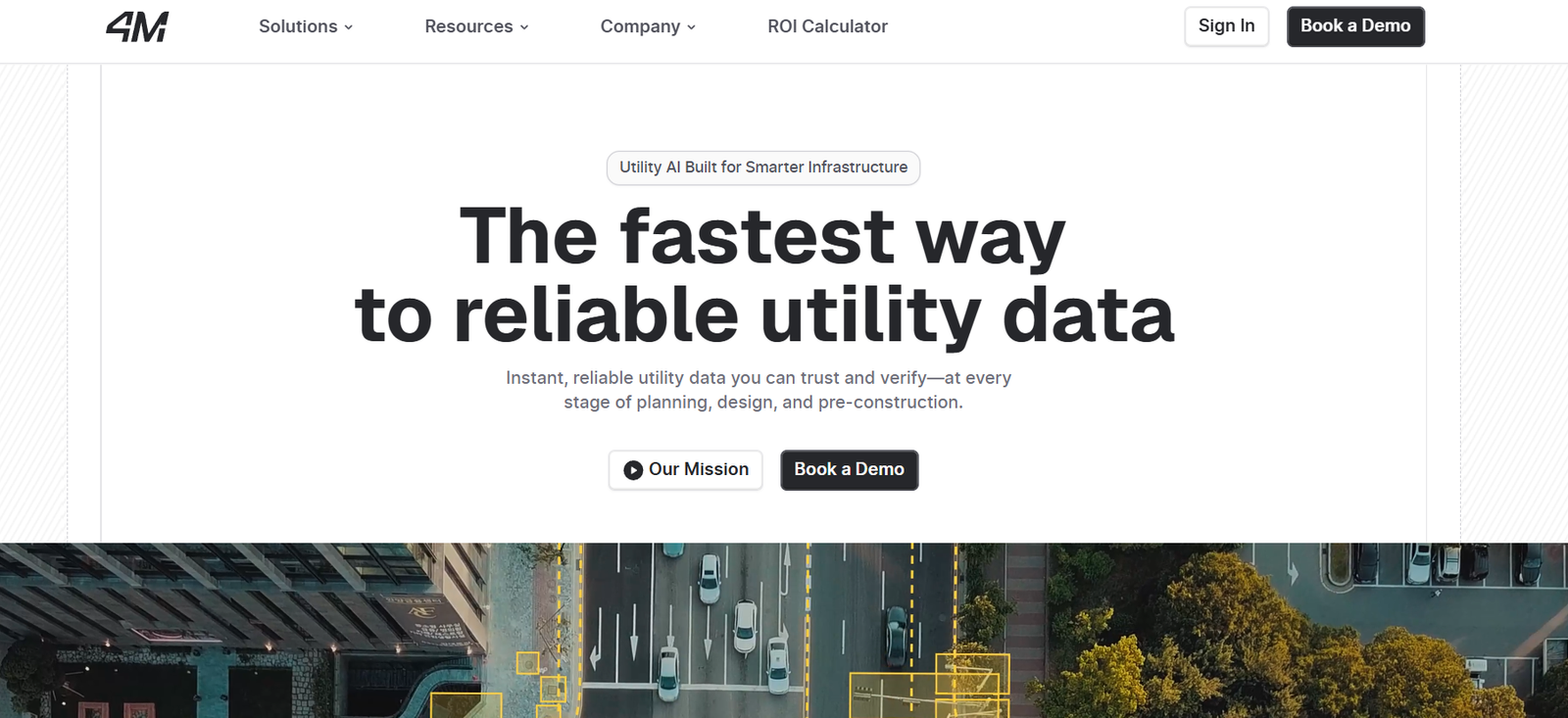
4M Analytics is an AI-powered utility mapping platform designed to help construction, engineering, and utility companies see what’s underground — before digging begins. Using advanced data fusion and geospatial analysis, 4M Analytics creates accurate, real-time maps of subsurface utilities, minimizing costly surprises, delays, and safety risks.
The company’s mission is to bring the power of satellite imagery, machine learning, and cloud computing to the infrastructure sector, delivering reliable underground data that improves decision-making, safety, and efficiency.
Features
AI-Powered Utility Detection: Uses artificial intelligence and remote sensing to detect buried pipelines, cables, and other infrastructure.
Global Utility Mapping Coverage: Offers mapping services across multiple geographies, adapting to local regulations and infrastructure standards.
Satellite and Aerial Data Integration: Combines satellite imagery with public records, historical maps, and permit data to build accurate models.
Custom Utility Maps (Utility Aware Design): Tailored maps delivered per project to support planning, engineering, and execution.
GIS & CAD Integration: Export utility maps directly into your GIS or CAD environment for seamless planning.
Construction Risk Reduction: Identifies high-risk areas before construction starts, reducing utility strikes and downtime.
Regulatory Compliance: Helps teams meet legal and safety regulations with up-to-date underground utility data.
Collaborative Platform Access: Cloud-based interface allows multiple stakeholders to view and use the same utility map in real time.
Nationwide U.S. Coverage: In the U.S., 4M Analytics provides scalable access to nationwide subsurface utility data.
How It Works
Project Definition: Users define the project’s geographic scope and objectives through the 4M Analytics dashboard.
Data Aggregation: The system pulls data from multiple sources — including satellite imagery, utility records, government databases, and LiDAR — to compile an extensive underground profile.
AI Mapping & Processing: Machine learning models analyze the data to detect subsurface features like water lines, electric cables, gas pipelines, telecoms, and more.
Utility Layer Creation: These findings are translated into a layered digital utility map that can be exported into GIS or CAD tools.
Delivery & Collaboration: Teams can access, share, and interact with the generated map from a centralized cloud platform, ensuring alignment before construction begins.
Use Cases
Pre-Construction Planning: Reduce utility strike risks and improve budgeting by having precise underground visibility.
Utility Coordination: Help engineering teams plan around existing infrastructure to avoid costly redesigns.
Highway and Road Projects: Identify subsurface hazards along corridors to avoid delays and ensure safety.
Urban Redevelopment: Use accurate subsurface mapping to plan new infrastructure in dense urban environments.
Telecom and Pipeline Installation: Plan fiber or gas pipeline routes with fewer right-of-way surprises.
Environmental Impact Studies: Understand buried infrastructure that could influence environmental remediation or sustainability planning.
Pricing
4M Analytics uses a custom pricing model, depending on:
Project size and geographic scope
Data layers required (e.g., electric, water, gas, telecom)
Delivery timeline
Integration and output format needs
Frequency of access or updates (one-time vs. subscription-based)
Organizations can request a quote or schedule a demo by contacting the team via https://www.4manalytics.com/contact. While exact pricing isn’t publicly listed, this is a premium, enterprise-grade platform geared toward large-scale infrastructure and construction projects.
Strengths
Unique Market Position: One of the few platforms delivering real-time, AI-generated utility maps at scale.
Time and Cost Savings: Helps teams avoid redesigns, utility damage, and unexpected costs.
Supports Safety and Compliance: Reduces risk of dangerous incidents and regulatory violations.
High Data Accuracy: Combines multiple sources for a high-confidence underground picture.
Easy Integration: Works with existing GIS and CAD systems, making adoption frictionless.
Scalable for Multiple Projects: Can support local, regional, or national infrastructure initiatives.
Experienced Industry Use: Trusted by infrastructure planners, DOTs, municipalities, and engineering firms.
Drawbacks
Enterprise-Focused: May not be suitable for small contractors or low-budget projects.
Custom Onboarding Required: Some learning curve and onboarding effort is necessary for new teams.
Data Limitations in Remote Areas: Accuracy may vary in regions with limited historical or regulatory records.
No Self-Service Plans Listed: The lack of transparent pricing and free trials may deter smaller organizations.
Primarily Focused on U.S. (as of now): While it supports global data models, its strongest coverage is in the United States.
Comparison with Other Tools
vs. One Call Centers (811 Services): 811 provides public utility locate requests but is reactive and slower. 4M Analytics offers proactive planning insights with greater detail and visual utility maps.
vs. Utility Locating Contractors: Traditional locating services require field visits. 4M eliminates delays by offering digital-first planning before ground crews arrive.
vs. GIS Consultants: Hiring a consultant for mapping is manual and time-intensive. 4M Analytics uses AI and automation to accelerate delivery and improve accuracy.
vs. Subsurface Utility Engineering (SUE): 4M complements SUE work by offering a digital baseline early in the planning process, reducing the need for repeated ground truthing.
4M Analytics is ideal for teams that want to digitally de-risk infrastructure projects from day one.
Customer Reviews and Testimonials
Though the platform is enterprise-grade and does not appear on consumer review sites like G2 or Capterra, real-world use cases and testimonials from the website and media indicate strong client satisfaction:
“Using 4M reduced our preconstruction planning time by weeks and eliminated a major utility conflict we hadn’t seen coming.”
“We used to rely on expensive and slow utility locating crews. With 4M, we start planning immediately.”
“It’s like Google Maps for underground infrastructure.”
The platform has been featured in industry media such as TechCrunch, VentureBeat, and Engineering News-Record (ENR), which highlights its growing influence in digital construction planning.
Conclusion
4M Analytics represents a major leap forward in how infrastructure projects are planned, designed, and executed. By bringing together the power of AI, satellite imagery, and geospatial data, the platform gives construction and engineering teams a high-fidelity view of the underground world — before a single shovel hits the ground.
Whether you’re building a highway, laying fiber, or managing an urban development project, 4M helps you mitigate risk, stay compliant, and build with confidence.
For teams that need to know what’s below — not guess — 4M Analytics delivers visibility, precision, and peace of mind.