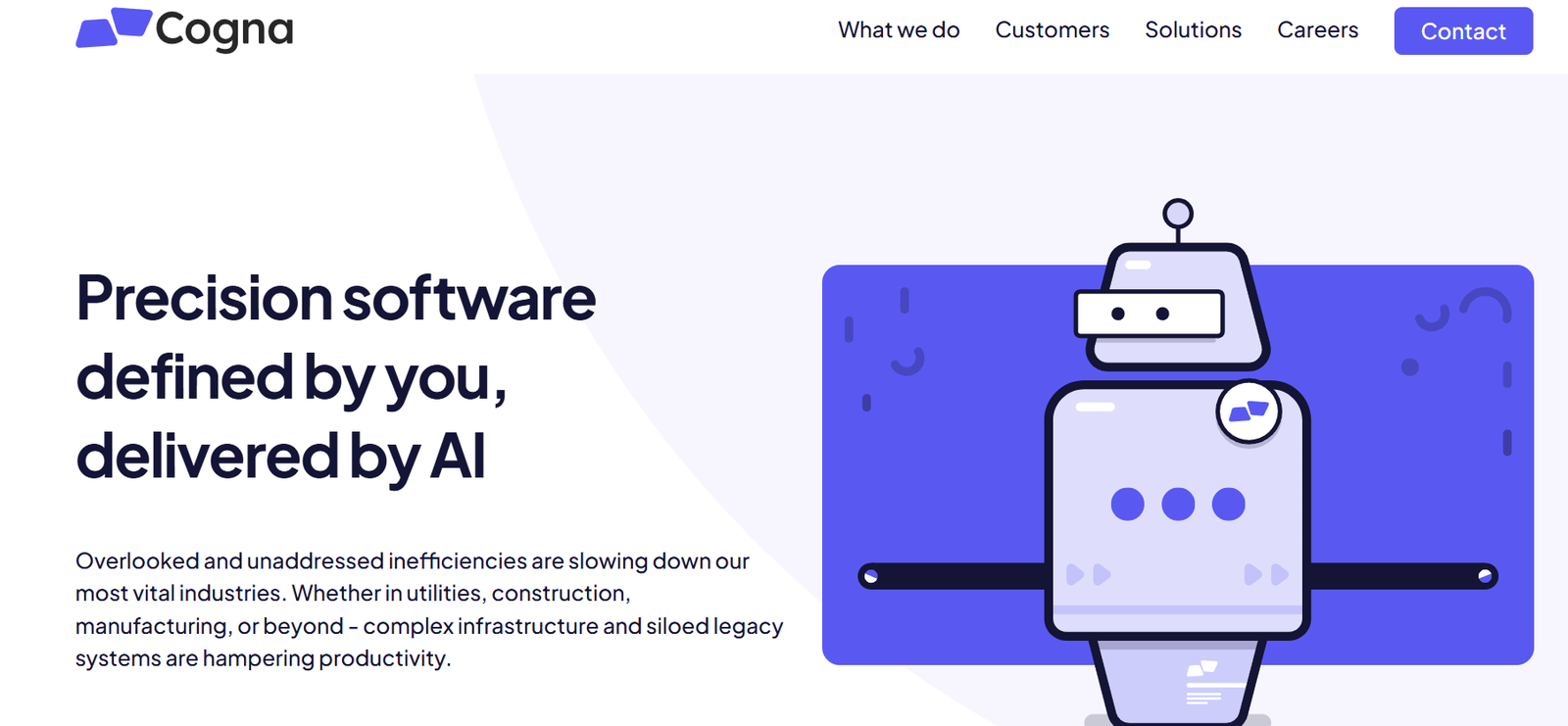
Cogna is a next-generation platform that enables teams to build, deploy, and manage AI agents that automate repetitive and complex workflows. Designed with non-technical users in mind, Cogna allows business, operations, and go-to-market (GTM) teams to leverage the power of AI—without needing to write code.
Unlike traditional automation platforms that rely on static rules, Cogna agents use Large Language Models (LLMs) like GPT-4 to interpret tasks, communicate in natural language, and make decisions dynamically. Whether you’re handling customer support tickets, running outreach campaigns, or analyzing user feedback, Cogna makes it easy to design autonomous agents that think, respond, and act like team members.
Features of Cogna
No-Code Agent Builder
Cogna’s visual builder lets users design workflows using drag-and-drop steps. Define prompts, logic, data inputs, and integrations without touching a single line of code.
LLM-Powered Intelligence
Each agent is powered by top-tier LLMs (e.g., OpenAI, Claude), enabling nuanced understanding, content generation, summarization, and natural language reasoning.
Custom Memory and Context
Agents can store and recall information across sessions. This persistent memory helps agents maintain context, personalize responses, and carry out long-running tasks.
Multi-Step Workflows
Design agents that perform sequential or conditional tasks—like reading an email, summarizing it, creating a support ticket, and alerting a team on Slack.
Tool Use and API Calls
Agents can interact with external tools via API calls, allowing them to fetch data, push updates, or trigger actions in other systems (like CRMs or analytics platforms).
Human-in-the-Loop (HITL)
Include approval steps, feedback loops, or optional human review before an agent completes high-impact actions—ensuring oversight and accountability.
Pre-Built Templates
Cogna includes templates for common business functions such as:
Support ticket triage
Outbound email generation
CRM enrichment
Knowledge base queries
Survey analysis
Team Collaboration
Workspaces allow multiple team members to build and refine agents collaboratively. Access controls and versioning help maintain workflow integrity.
Security and Compliance
Cogna supports role-based access, data encryption, and audit logs to ensure your AI operations are secure and compliant with enterprise standards.
How Cogna Works
Define the Goal
Start by identifying a task or process you want to automate, such as summarizing customer feedback or drafting onboarding emails.Build the Agent
Use Cogna’s no-code builder to design your agent’s workflow. Add blocks for reading inputs, using an LLM, storing memory, or making API calls.Test with Real Inputs
Simulate agent behavior with actual or sample data. Observe how the LLM responds and tweak your prompts for accuracy and tone.Deploy and Monitor
Once you’re satisfied with performance, deploy the agent. Cogna supports scheduling and real-time triggers via API or integrations.Refine and Iterate
Use logs and analytics to refine your agent. Add logic, update tools, or insert checkpoints to adapt to new needs over time.
Use Cases for Cogna
Customer Support Automation
Agents can classify support tickets, extract key issues, suggest responses, or escalate urgent cases—all while maintaining tone and context.
Outbound Sales Campaigns
Generate personalized outreach emails using CRM data. Cogna agents can research leads, draft emails, and even manage responses.
Marketing and Content Ops
Repurpose blog content into social posts, email newsletters, or video scripts. Cogna agents streamline content transformation.
Internal Communication Summaries
Summarize Slack threads, meetings, or long documents into actionable insights or digest emails sent to team leads.
Product Feedback Analysis
Aggregate customer feedback from surveys or support chats, then tag and summarize it to extract feature requests or bug reports.
HR and Recruiting Workflows
Draft offer letters, respond to candidate queries, and keep hiring pipelines up-to-date with agents trained on internal hiring policies.
Pricing of Cogna
As of June 2025, Cogna operates on a request-based pricing model, with plans based on usage and team size. The platform currently offers the following tiers:
Starter (Free)
1 workspace
Limited agents (up to 3)
Basic LLM access
Community support
Ideal for individual experimentation
Pro Plan – Starting at $49/month
Up to 10 agents
Enhanced memory and context length
GPT-4 and Claude support
Shared team workspace
Email support
Business Plan – Starting at $199/month
Unlimited agents
API integrations and custom tools
Role-based access controls
Priority support
Advanced analytics
Enterprise – Custom Pricing
SSO & SOC 2 compliance
Dedicated onboarding
Custom hosting or private deployment
SLA guarantees and premium support
For up-to-date pricing and custom quotes, visit https://www.cogna.co.
Strengths of Cogna
Designed for business teams—no coding required
Supports dynamic workflows with reasoning via LLMs
Human-in-the-loop features ensure reliability
Rich integration potential with APIs and SaaS tools
Modular and scalable agent framework
Powerful memory features for contextual interactions
Quick time to value with templates and visual editor
Built with security and enterprise readiness in mind
Drawbacks of Cogna
Still early in adoption—limited community or third-party tutorials
Learning curve in prompt engineering for optimal agent behavior
No native mobile experience (currently desktop only)
Performance tied to external LLM provider limits (e.g., OpenAI rate limits)
Advanced integrations and agent logic require paid plans
Comparison with Other Tools
Cogna vs. Zapier
Zapier automates app-to-app workflows using rules and triggers. Cogna goes further by adding AI reasoning to workflows, making them flexible and adaptable.
Cogna vs. LangChain
LangChain is a developer toolkit for building LLM-powered apps. Cogna offers a no-code interface and workflow abstraction, making it suitable for non-engineers.
Cogna vs. Relevance AI
Relevance AI is also agent-focused, but more tailored for data clustering and analysis. Cogna is broader and more focused on business operations and GTM use cases.
Cogna vs. ChatGPT or Claude
While ChatGPT is conversational, Cogna turns those capabilities into deployable, repeatable workflows that operate at scale, across systems.
Customer Reviews and Testimonials
While Cogna is in its early growth stage, initial adopters have reported strong returns:
“Cogna let our operations team build AI agents that saved dozens of hours per week—without needing help from engineering.”
— Director of Ops, SaaS Startup
“The ability to deploy agents that talk to our CRM and summarize customer emails is a game-changer.”
— Growth Lead, B2B Tech Firm
“We automated our support triage process in one day. Cogna turned a bottleneck into a scalable system.”
— Head of Support, E-commerce Brand
As more companies experiment with LLMs across business functions, platforms like Cogna are becoming vital to operational AI adoption.
Conclusion
Cogna empowers teams to automate business workflows using intelligent, no-code AI agents. By combining the power of LLMs with a visual interface and real-time integrations, Cogna allows operations, support, marketing, and GTM teams to build agents that think, reason, and act independently.
If you’re looking for a platform that helps your team leverage AI for practical, measurable business outcomes—without developer bottlenecks—Cogna is a smart, scalable choice.