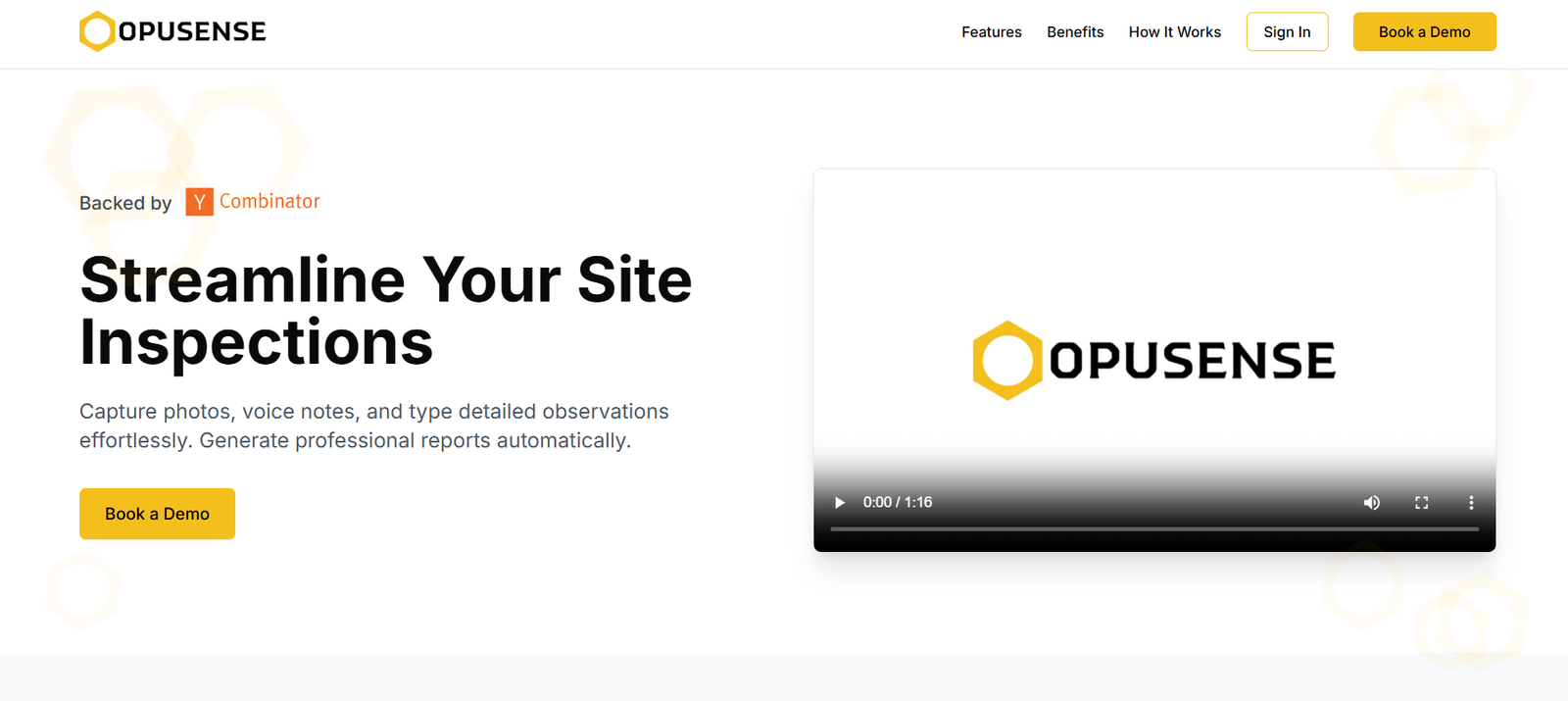
Opusense is an AI-powered productivity assistant designed to help professionals manage their workday more intelligently. By integrating AI-driven insights with task management, Opusense acts as a smart planner that helps users make informed decisions about how to allocate their time and energy. Unlike traditional to-do lists or calendar apps, Opusense offers context-aware suggestions, prioritization, and actionable recommendations based on your habits, goals, and workload.
Targeted at knowledge workers, remote professionals, and entrepreneurs, Opusense focuses on enhancing deep work, minimizing distractions, and optimizing productivity through a combination of behavioral insights and intelligent planning.
Features
Opusense includes a robust set of features designed to streamline personal productivity and professional task management:
AI-Powered Daily Planning: Suggests the best way to structure your day based on goals and energy levels
Smart Prioritization: Ranks tasks using urgency, impact, and effort level
Time Awareness: Tracks time spent on tasks and gives nudges to stay on schedule
Context-Based Recommendations: Learns your patterns to provide personalized task suggestions
Goal Tracking: Links daily tasks to long-term objectives to maintain strategic alignment
Task Bundling: Groups similar tasks for batch processing and flow efficiency
Distraction Alerts: Identifies productivity bottlenecks and offers tips for focus
Progress Analytics: Tracks performance over time to help users understand productivity trends
Clean, Minimalist Interface: Designed to reduce friction and encourage adoption
Cross-Platform Access: Available as a web app with mobile accessibility under development
These features aim to support not just getting things done—but getting the right things done.
How It Works
Opusense functions as a digital assistant that goes beyond task listing:
Users input their tasks, goals, and working preferences into the platform
Opusense’s AI analyzes the data and builds a personalized daily schedule
Throughout the day, it provides real-time feedback and adjustments based on actual performance
It learns from user behavior, improving its suggestions over time
Tasks are prioritized based on urgency, energy levels, focus patterns, and deadlines
At the end of each day or week, users receive insights into what worked, what didn’t, and how to improve
The platform focuses on helping users achieve deep work states while maintaining a balanced workload.
Use Cases
Opusense serves a broad range of productivity-focused users:
Knowledge Workers: Manage multiple priorities and reduce decision fatigue
Freelancers: Structure unstructured time and improve billable hours
Remote Employees: Maintain focus and alignment in asynchronous work environments
Startup Founders: Prioritize critical tasks and stay on top of fast-changing goals
Students and Researchers: Organize research work, assignments, and study sessions
Coaches and Consultants: Use analytics and scheduling to manage client time and deep work
Corporate Teams: Help employees self-manage without micromanagement
Opusense is particularly useful for individuals balancing strategic and tactical responsibilities.
Pricing
As of the current information available on the Opusense website, the platform is currently in early access, with free usage available to early adopters.
Pricing structure highlights:
Free Beta Access: Users can sign up and begin using core features at no cost
No Credit Card Required during onboarding
Paid Tiers (Expected): Future pricing likely to include personal, pro, and enterprise tiers with differences in analytics, customization, and team support
Team Features: Not yet publicly priced, but planned for future releases
Users interested in long-term use are encouraged to sign up early to access features during the development phase before pricing tiers are introduced.
Strengths
Opusense delivers several key strengths in the personal productivity market:
AI takes the guesswork out of daily planning
Designed around human focus and behavior, not just task lists
Clean and intuitive design for easy daily use
Helps align daily work with long-term goals
Provides insightful analytics to improve over time
Suitable for both individual and team productivity
Learning algorithm improves as you use it
Available for free during early access
It positions itself as a smart assistant rather than just another productivity tracker.
Drawbacks
While Opusense is a promising tool, there are some early-stage limitations:
Still in early access, so some features may be under development or limited
No mobile app available yet, which may limit on-the-go usability
Not currently integrated with popular calendars or task tools (e.g., Google Calendar, Notion, Trello)
Requires consistent input to deliver optimal results
May not suit users who prefer manual or highly visual planning tools (e.g., Kanban boards)
As the platform matures, these areas are expected to improve based on user feedback.
Comparison with Other Tools
Opusense is entering a crowded space but offers a unique AI-first approach to productivity:
Opusense vs. Todoist
Todoist is a powerful task manager but lacks AI-powered planning and prioritization. Opusense automates planning based on user behavior and goals.
Opusense vs. Sunsama
Sunsama integrates calendars and task lists for manual planning. Opusense uses AI to guide and structure your day without manual time-blocking.
Opusense vs. Motion
Motion also uses AI to schedule tasks, but it’s more calendar-centric. Opusense is more focused on focus and intention than rigid scheduling.
Opusense vs. Notion
Notion is highly customizable but requires manual setup. Opusense offers out-of-the-box intelligence for immediate productivity benefits.
Customer Reviews and Testimonials
As Opusense is in its early release phase, formal testimonials are not yet listed on the website. However, early adopters in startup and productivity communities have expressed enthusiasm:
“I’ve tried every productivity app out there. Opusense is the first one that feels like it thinks with me.”
— Solo Founder, SaaS Startup
“Really like the daily focus suggestions—it’s like having a coach built into my planner.”
— Remote Developer
“I didn’t realize how much time I was losing until Opusense showed me. Now my days actually align with my goals.”
— Freelance Designer
These early impressions suggest high value for knowledge workers seeking structure without micromanagement.
Conclusion
Opusense is a next-generation productivity assistant that reimagines how professionals plan their days. Instead of simply tracking tasks, it helps users make better decisions about what to do, when, and why—using AI to adapt and learn continuously. Its early-access model gives users a chance to help shape the future of intelligent planning software while benefiting from a tool built around intentional work and behavioral awareness.
For individuals and teams looking to elevate focus, reduce busywork, and align execution with strategy, Opusense offers a powerful and refreshing solution. With AI at its core and user wellbeing in mind, Opusense is a productivity tool designed not just for doing more—but for doing better.