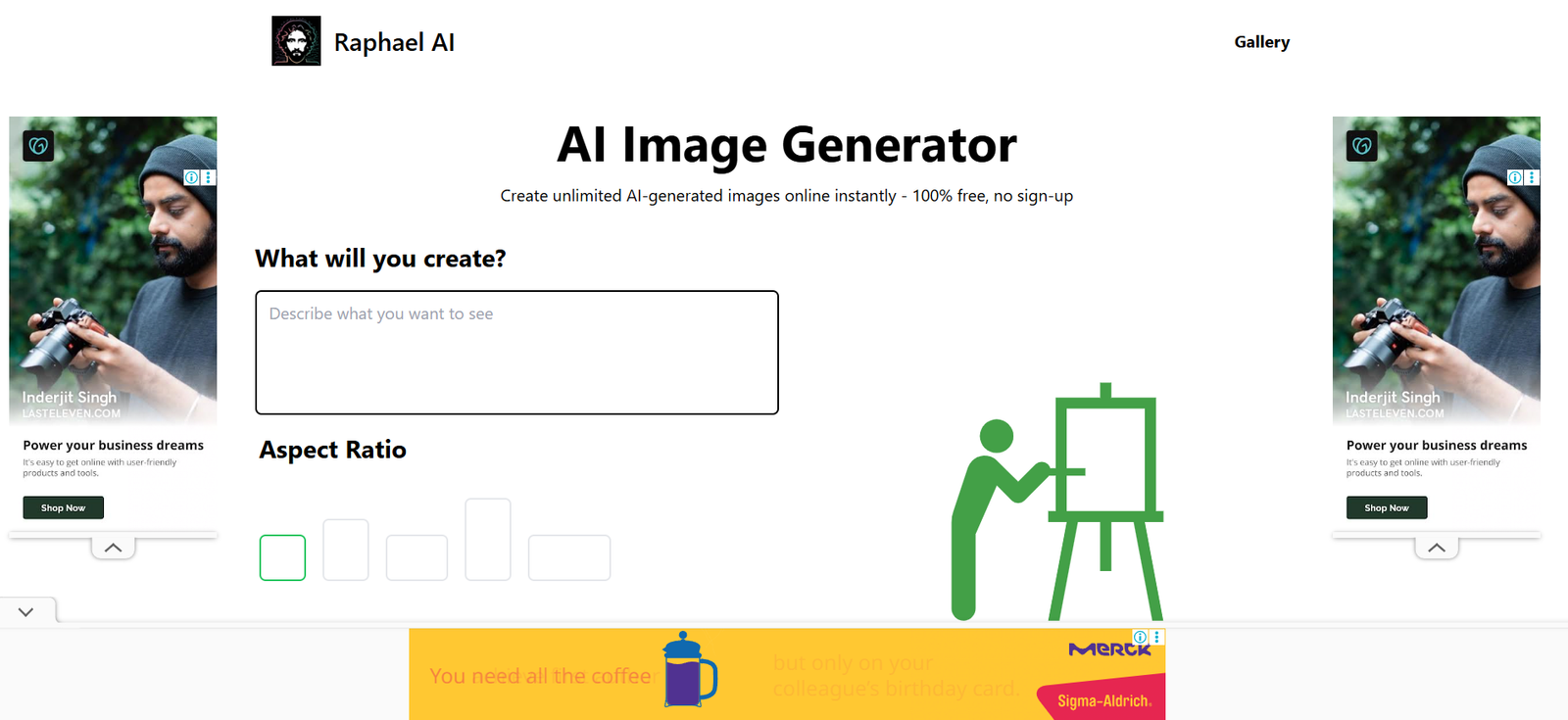
Raphael AI is an open-source, Python-based agent framework for creating autonomous AI agents that interact with tools, environments, and each other. The framework is designed around modularity and flexibility, allowing developers to plug in their own logic, models, and memory systems to build custom agents.
The project is hosted on GitHub, where it’s actively developed and maintained by a community of AI practitioners. It supports multi-agent coordination, long-term memory storage, retrieval, and tool integration—making it ideal for complex, autonomous workflows.
Raphael AI stands out by focusing on real autonomy, not just chatbot interactions. It enables agents that operate independently, schedule tasks, communicate with APIs, use external tools, and collaborate with other agents in a shared workspace.
Features
1. Modular Architecture
The system is built with a highly modular structure—developers can define custom tools, memory backends, planning strategies, and execution environments.
2. Long-Term Memory
Raphael AI includes support for long-term memory, allowing agents to recall past events, update knowledge, and retain context across tasks and sessions.
3. Tool Usage and Integration
Agents can be configured to use external APIs, run Python scripts, access web data, or interact with other software via plugin tools.
4. Multi-Agent Collaboration
Support for multiple agents working together. Agents can share tasks, coordinate responses, and communicate through structured channels.
5. Planning and Task Management
Built-in planning systems allow agents to break down tasks into subtasks, track progress, and prioritize based on goals and memory.
6. Open-Source and Extensible
Freely available under an open-source license (Apache 2.0), allowing full customization, community contributions, and integration into enterprise-grade workflows.
How It Works
Set Up the Framework: Clone the GitHub repository and install dependencies using Python and a virtual environment.
Configure Your Agent: Define your agent’s goals, tools, memory system, and logic modules.
Add Tools and Plugins: Integrate APIs, data sources, and execution tools the agent can use autonomously.
Deploy and Run: Launch your agent and observe how it interacts with its environment, completes tasks, and collaborates with other agents.
Customize and Scale: Build more advanced agents by plugging in your own models (e.g., GPT, Claude), or extending memory and logic capabilities.
Use Cases
Raphael AI can be applied across a variety of real-world scenarios:
Autonomous Research Agents: Agents that gather data, summarize findings, and compile research reports over time.
AI Assistants with Memory: Personal assistants that remember previous interactions, calendar events, and ongoing tasks.
DevOps Automation: Agents that monitor services, deploy code, manage infrastructure, and respond to alerts.
Customer Service Bots: Multi-agent systems that route queries, fetch information, and provide personalized support.
Collaborative AI Teams: Simulate organizations of AI agents with different specialties working toward shared objectives.
Pricing
Raphael AI is 100% free and open-source.
There are no pricing tiers, subscriptions, or premium versions. All features are available under the Apache 2.0 license, making it accessible for personal, academic, and commercial use.
Developers can clone or fork the repository directly from GitHub and begin building agents without restrictions.
Strengths
Truly Autonomous Architecture: Supports real-world agent behavior with memory, planning, and tool use.
Community-Driven Development: Transparent, open-source model with growing community support.
Customizable and Extensible: Every component can be modified or extended to suit advanced use cases.
Supports Multi-Agent Systems: Ideal for simulating collaborative AI teams.
Free and Open: No cost or vendor lock-in.
Drawbacks
Developer-Oriented: Requires coding skills, particularly in Python, to get started.
No GUI or No-Code Interface: Not ideal for non-technical users; lacks visual workflow tools.
Still Maturing: As a newer project, the ecosystem and documentation are still growing.
Comparison with Other Tools
Raphael AI vs. Auto-GPT
Auto-GPT is focused on autonomous task execution with GPT-based planning. Raphael AI offers a more modular, extensible framework suited for building complete agent systems with memory and multi-agent support.
Raphael AI vs. LangChain Agents
LangChain is model-centric and integrates well with LLMs, but its agents often rely on simple chain-of-thought logic. Raphael AI enables deeper planning, real autonomy, and persistent memory across sessions.
Raphael AI vs. CrewAI
CrewAI provides a multi-agent coordination framework for structured teamwork. Raphael AI offers broader customization and deeper architecture control, better suited for advanced developers and researchers.
Customer Reviews and Testimonials
As an open-source project, Raphael AI is used by early adopters, researchers, and developers worldwide. While formal testimonials are limited, user feedback from GitHub and forums reflects strong support:
“Raphael AI gave us the foundation to build a fully autonomous assistant for internal workflows. The memory system is a game-changer.”
– AI Engineer, Startup Lab
“Finally, a modular agent framework that’s actually customizable and production-ready.”
– Independent Developer
“We used Raphael AI to simulate multi-agent economic models. Worked perfectly out of the box.”
– Researcher, University AI Lab
Conclusion
Raphael AI is a powerful, open-source framework for building autonomous AI agents with real-world applications. Its support for memory, tool use, and multi-agent coordination positions it as one of the most flexible and scalable agent systems available today.
If you’re a developer or researcher interested in building AI agents that go beyond chatbots—agents that can think, remember, plan, and act—Raphael AI is an excellent place to start.
Explore the project and get involved via the official website or the GitHub repository.