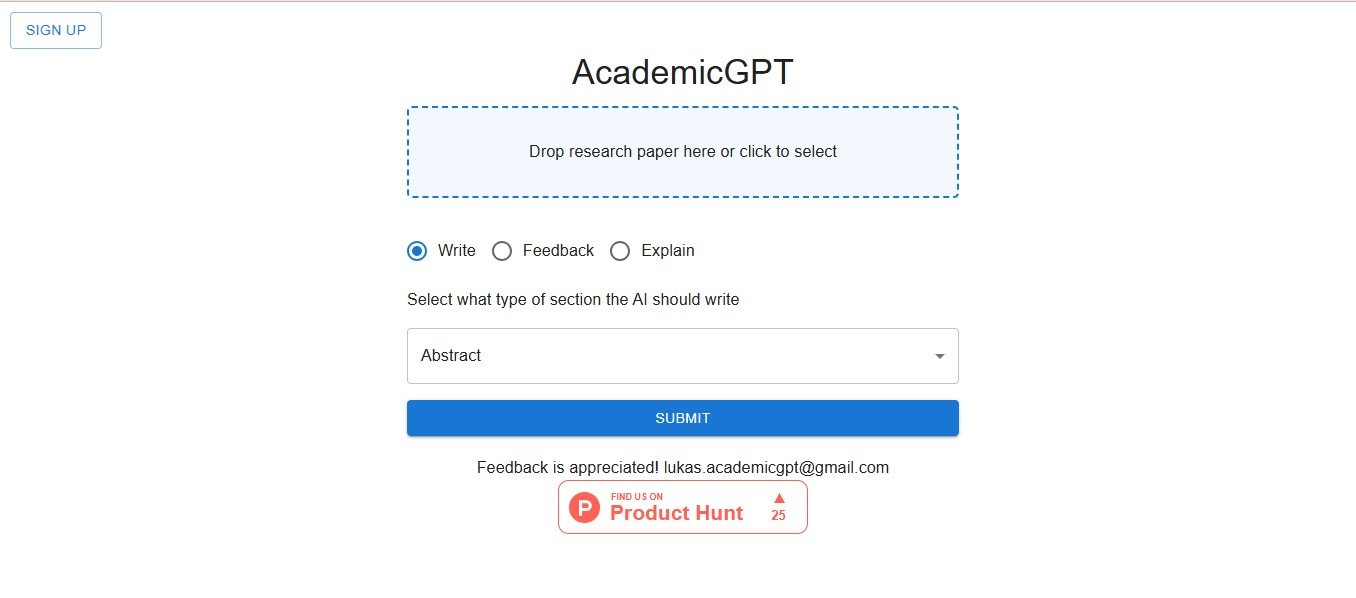
AcademicGPT is an AI-powered academic writing assistant tailored to meet the needs of students, researchers, and educators. The platform integrates natural language processing (NLP) to help users generate essays, academic papers, and reports while ensuring originality and proper citation.
What sets AcademicGPT apart is its focus on research-driven writing. The tool can help locate credible sources, create structured outlines, and even generate citations in multiple formats. It’s designed to save time and improve the overall quality of academic writing while maintaining ethical and professional standards.
Key Features of AcademicGPT
AcademicGPT offers a wide array of features specifically designed for academic writing and research. Here are its standout functionalities:
1. AI-Powered Essay and Paper Generator
AcademicGPT allows users to generate essays, research papers, and other academic documents by simply inputting a topic or keywords. The AI ensures the content is structured, well-researched, and coherent.
2. Research Assistance
The platform helps users find relevant academic sources and studies, making it easier to gather data and references for their work.
3. Citation and Referencing Tools
AcademicGPT supports multiple citation styles, including APA, MLA, Chicago, and Harvard. Users can generate citations automatically and ensure their work adheres to academic standards.
4. Plagiarism Checker
With a built-in plagiarism detection feature, AcademicGPT ensures that the content is original and free from any unintentional copying.
5. Customizable Templates
The tool includes preloaded templates for various types of academic documents, such as essays, theses, research proposals, and lab reports.
6. Multi-Language Support
AcademicGPT supports multiple languages, making it a valuable tool for non-English-speaking students and researchers.
7. Outline Generator
The platform provides customizable outlines to help users organize their ideas and create structured documents.
8. Editing and Proofreading Tools
AcademicGPT includes advanced editing features to refine grammar, sentence structure, and tone, ensuring the content is polished and professional.
9. Data Integration and Summarization
Users can upload academic articles, research papers, or PDFs, and the AI can extract key points, summarize findings, and integrate the information into their writing.
How Does AcademicGPT Work?
AcademicGPT simplifies the academic writing process in a few easy steps:
Step 1: Select a Task
Choose the type of academic document you want to create, such as an essay, research paper, or lab report.
Step 2: Enter Your Topic
Provide a topic or keywords related to your research. If you’re unsure, the tool can suggest topics based on your field of study.
Step 3: Generate Content
The AI generates a draft based on the provided topic, including an introduction, body, and conclusion. Users can also customize the content using outlines or templates.
Step 4: Edit and Improve
Use the editing and proofreading tools to refine the document. Check for grammar, coherence, and style improvements, and run the plagiarism checker to ensure originality.
Step 5: Add Citations
With the built-in citation tool, users can add properly formatted references to their work.
Step 6: Finalize and Export
Once the document is complete, export it in the desired format, such as .docx or .pdf.
Use Cases of AcademicGPT
AcademicGPT caters to a wide audience, from students and researchers to educators and professionals. Here are some common use cases:
1. Essay and Thesis Writing
Students can use AcademicGPT to draft essays, theses, and dissertations, ensuring they meet academic standards.
2. Research Assistance
Researchers can use the tool to locate relevant studies, summarize findings, and integrate data into their work.
3. Teaching and Curriculum Development
Educators can leverage AcademicGPT to create lesson plans, teaching materials, and sample essays for their students.
4. Academic Publications
Professionals preparing journal articles or conference papers can use AcademicGPT for drafting, editing, and referencing.
5. Standardized Test Preparation
Students preparing for exams like the GRE, SAT, or TOEFL can use AcademicGPT to practice essay writing and improve their skills.
Pricing
AcademicGPT offers flexible pricing plans tailored to individual users, teams, and institutions:
Free Plan
- Limited access to essay generation (up to 500 words).
- Basic editing tools.
- No access to advanced features like citation tools or plagiarism detection.
Pro Plan
- Cost: $19.99/month or $149.99/year.
- Unlimited essay and research paper generation.
- Access to citation and plagiarism tools.
- Advanced editing and proofreading features.
Institutional Plan
- Custom pricing for schools, universities, and organizations.
- Includes team accounts, centralized management, and priority support.
For the most up-to-date pricing, visit the official AcademicGPT pricing page.
Strengths of AcademicGPT
- Comprehensive Academic Tools: From essay generation to research assistance, AcademicGPT covers all aspects of academic writing.
- Time-Saving: The AI automates time-consuming tasks like drafting, editing, and citation formatting.
- Multi-Language Support: A valuable feature for non-English speakers or those working in multilingual academic environments.
- User-Friendly Interface: The platform is intuitive and easy to navigate, even for first-time users.
- High-Quality Output: The AI ensures that generated content is well-structured, coherent, and original.
Drawbacks of AcademicGPT
- Limited Free Plan: The free version offers minimal features, which may not be sufficient for regular academic writing.
- Dependence on AI: While helpful, AI-generated content may still require manual adjustments to meet specific academic standards.
- No Mobile App: The lack of a dedicated mobile app limits accessibility for on-the-go users.
AcademicGPT vs. Competitors
AcademicGPT vs. Grammarly
Grammarly focuses on grammar, tone, and style correction, while AcademicGPT offers a broader range of academic-specific features, including essay generation and research tools.
AcademicGPT vs. Turnitin
Turnitin is a plagiarism detection tool commonly used in academic institutions. AcademicGPT includes a plagiarism checker but goes beyond by offering essay generation and citation tools.
AcademicGPT vs. ChatGPT
While ChatGPT can generate essays, AcademicGPT is tailored for academic purposes, with features like research assistance, structured outlines, and citation tools.
Customer Reviews and Testimonials
Here are some testimonials from AcademicGPT users:
- “AcademicGPT has saved me hours on research and writing. The citation tool is incredibly useful!” – Maria L., College Student.
- “As a professor, I use AcademicGPT to create examples for my students. It’s a great teaching tool.” – Dr. James T., Educator.
- “The plagiarism checker and editing tools are top-notch. I highly recommend this platform for academic work.” – Susan R., Researcher.
Conclusion
AcademicGPT is a powerful AI tool designed to simplify academic writing and research. With its robust features, including essay generation, citation tools, and plagiarism checks, it’s an invaluable resource for students, researchers, and educators.
While the free plan offers limited functionality, the Pro Plan provides excellent value for those who frequently engage in academic writing. Whether you’re drafting an essay, preparing a research paper, or organizing a lesson plan, AcademicGPT can help you save time and improve your work quality.